What Malaysian F&B, Pharma & Logistics Brands Need to Know
Labels used to be a final-step formality, something added right before a product left the factory. That’s no longer true. The 2026 label printing trends we’re tracking show labels doing far more work than ever. They now prove compliance, tell a sustainability story, and connect physical products to digital experiences.
For F&B, pharmaceutical, chemical, manufacturing, and logistics businesses, these shifts aren’t abstract. Avimatic has served exactly these industries from our Kuala Lumpur facility since 2005. We see the effects on our production floor daily. This year’s changes affect what you print, how fast you need it, and what regulators expect on the pack. Here’s what’s changing, and how to prepare.
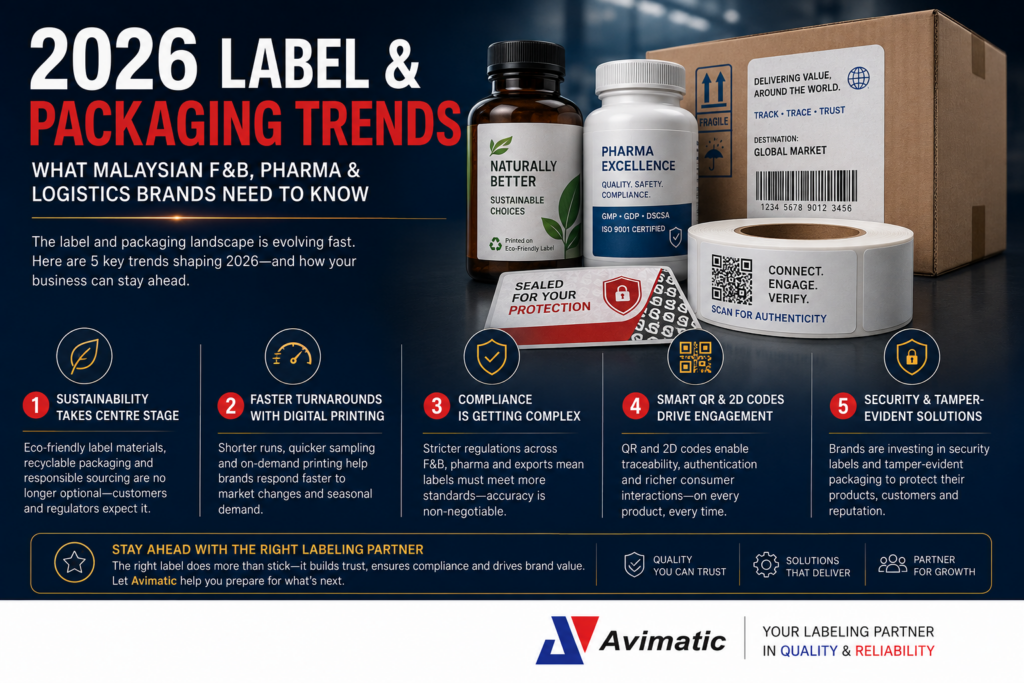
1. Sustainability Is Now a Baseline 2026 Label Printing Trend
For years, eco-friendly labelling was a differentiator. In 2026, it’s the starting point. Buyers and regulators want verifiable evidence, not vague claims, around recyclable content, water-based inks, and reduced material waste. New advertising standards are also cracking down on greenwashing. You can no longer print a “recyclable” icon without third-party verification and the local infrastructure to back it up.
As a result, FSC-certified paper, recyclable facestocks, and water-based adhesives are becoming standard RFP items, not premium add-ons. Also, if your current supplier can’t speak to the environmental profile of your labelstock, that’s a conversation worth having now.
2. Faster Turnarounds: A Defining 2026 Label Printing Trend
Brands across every sector are compressing timelines. SKU counts keep rising, product versioning happens more often, and teams are pushing past the old three-week-from-PO standard every quarter. This is especially true for F&B and consumer goods brands running seasonal promotions or regional variants.
Because of this, digital label printing has become essential infrastructure rather than a niche capability. Today, it supports short runs, variable data, and quick changeovers without the cost penalty of traditional long-run setups. That matters if you’re a growing brand that can’t commit to warehouse-filling quantities just for a better unit price.
3. Compliance Complexity Is Reshaping Regulated-Industry Labelling
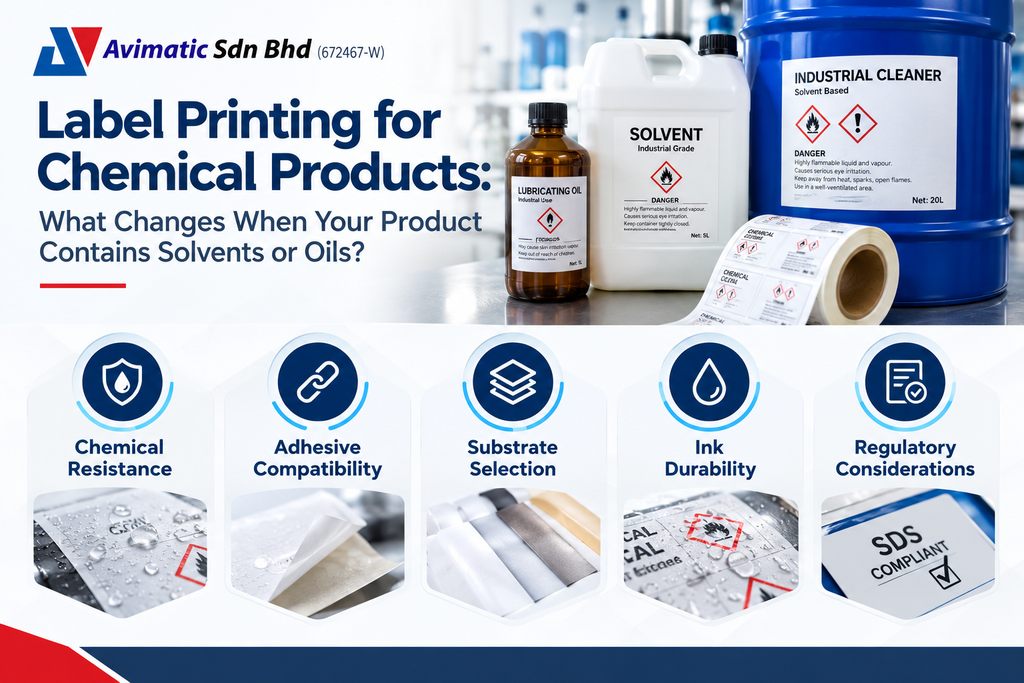
Regulated industries face a heavier labelling load this year. Pharmaceutical labels increasingly require serialized codes and multilingual regulatory text. Food and beverage labels need to fit more nutritional, allergen, and traceability information into the same physical space. Meanwhile, chemical labelling standards continue to tighten around hazard communication.
For instance, extended content labels — booklet or multi-layer formats — pack dense regulatory information onto compact packaging. Getting this right requires the correct label format and a production partner who understands regulatory labelling across industries. That’s exactly why ISO-certified, traceable production processes matter more this year than in years past.
4. Smart Labels: The Digital Side of 2026 Label Printing Trends
QR codes and 2D codes are no longer a marketing gimmick. Brands now use them for product traceability, extended product information, authentication, and direct customer engagement from the pack. Industry analysts call this shift the digital product passport — tracking items from factory to shelf. It’s a concept gaining real traction well beyond Europe.
Similarly, the label industry is preparing for GS1’s Sunrise 2027 initiative, which will shift point-of-sale barcodes toward 2D formats. Also, if your packaging is print-only, it’s worth evaluating where a scannable code could add supply-chain traceability value.
5. Security and Tamper-Evidence Remain Core to Label Printing
As supply chains lengthen and counterfeit risk grows, tamper-evident labelling stays a priority across pharma, logistics, and high-value goods. Labels that chip or fracture when someone attempts removal remain one of the most reliable low-tech safeguards available.
Therefore, if your products pass through multiple hands before reaching customers, tamper-evident tagging deserves a place in your specification. This is common in logistics, F&B distribution, and pharma — not just premium product lines. For a broader view of where the industry is heading, Konica Minolta’s 2026 label printing outlook offers useful additional context.
How Avimatic Helps You Stay Ahead of 2026 Label Printing Trends
At Avimatic, we’ve spent close to two decades producing self-adhesive labels for Malaysian industries that can’t afford errors. Our clients span food & beverage, pharmaceutical, chemical, manufacturing, packaging, and logistics. We build our ISO-certified production systems around exactly the pressures shaping the industry this year:
- Compliance-ready production for regulated industries, with quality control systems designed for traceability and consistency across short and long runs
- Flexible run sizes, from large national accounts to smaller customised requirements
- Security and tamper-evident label options, including labels that chip and fracture when tampering is attempted
- Quotation and artwork turnaround in under 24 hours, backed by a dedicated account manager
In short, labels are no longer just a compliance checkbox or a branding afterthought. They’re now a working part of your product’s supply chain, sustainability story, and customer trust. If you haven’t reviewed your label specification against the 2026 label printing trends above, now is a good time.